Showing posts sorted by relevance for query merwin. Sort by date Show all posts

Monday, March 10, 2014

Parable for Daylight Time & Lent

First Sunset of Daylight Savings Time
" . . . traveling from day to night only, neither forward nor sideward . . . "

Parable
First divesting ourselves of worldly goods, as St. Francis teaches,
in order that our souls not be distracted
by gain and loss, and in order also
that our bodies be free to move
easily at the mountain passes, we had then to discuss
whither or where we might travel, with the second question being
should we have a purpose, against which
many of us argued fiercely that such purpose
corresponded to worldly goods, meaning a limitation or constriction,
whereas others said it was by this word we were consecrated
pilgrims rather than wanderers: in our minds, the word translated as
a dream, a something-sought, so that by concentrating we might see it
glimmering among the stones, and not
pass blindly by; each
further issue we debated equally fully, the arguments going back and forth,
so that we grew, some said, less flexible and more resigned,
like soldiers in a useless war. And snow fell upon us, and wind blew,
which in time abated — where the snow had been, many flowers appeared,
and where the stars had shone, the sun rose over the tree line
so that we had shadows again; many times this happened.
Also rain, also flooding sometimes, also avalanches, in which
some of us were lost, and periodically we would seem
to have achieved an agreement; our canteens
hoisted upon our shoulders, but always that moment passed, so
(after many years) we were still at that first stage, still
preparing to begin a journey, but we were changed nevertheless;
we could see this in one another; we had changed although
we never moved, and one said, ah, behold how we have aged, traveling
from day to night only, neither forward nor sideward, and this seemed
in a strange way miraculous.
And those who believed we should have a purpose
believed this was the purpose, and those who felt we must remain free
in order to encounter truth, felt it had been revealed.


By Louise Glück, winner of the Pulitzer Prize
and author, most recently, of A Village Life

This poem appears on the New York Times list of six poems for the end of daylight savings time, along with others by W. S. Merwin and Vijay Seshadri; Mary Oliver, James Tate, and Derek Walcott. It is a fascinating assortment of poetry that I have already referred to a few times, all just right for the shift in time and light that occurs each November. I think, however, that Gluck's "Parable" is, if anything, even more perfect for the beginning of daylight time, as well as the beginning of Lent.

Daniel Bosch at Arts Fuse comments on Gluck's poem (and the other five) without even grasping the connection that "falling back" refers to the annual conclusion of daylight savings time and the reversion to standard time. Duh! He wonders if he missed "some sort of equinox" or "sunspots." No! You just missed re - setting your clock to match the season!

Rather unkindly, Bosch suspects that admirers of Gluck's "Parable" "do not know as many poets as I do." Yet I wonder if perhaps he does not follow the passing seasons with the same verve and precision as Gluck, Merwin, Oliver, and I do.

P.S. Some closing thoughts
from Leonard Orr & Nova Languages
9 November 2010

Len: You are right; I read it in the times and thought it was great to find such a grouping of poems in the major newspaper. Now if only they did this regularly not only for seasons but for each month, major events, solstices and equinoxes, the start and end of Daylight Savings Time, elections, New Year's, the release of the new press of Beaujolais, TuBishvat, and dozens of other occasions.

Nova Languages: I completely agree. I especially like the idea of a group of poems celebrating solstices and equinoxes; but also for many other astronomical events, not to mention planetary events. What a great way to learn about these things! This brings to mind these often quoted lines from William Carlos Williams: "It is difficult to get the news from poems, yet men die miserably every day for lack of what is found there."

Len: That sounds much better than the Times motto "All the News that's fit to print." Even there they would have been improved by consulting poets.


Click for
additional comments
from facebook post.

And
another sunset poem: "The Evening Star"
also "Iris" & "Penelope"

Sunday, September 13, 2020

A Bright Posterity

Happy Grandparents’ Day!
My mother’s parents
M. Rovilla Heideman & Paul J. Lindsey
I like the way that their 1920s outfits
capture the style of Virginia Woolf & James Joyce!

In the following poem, a past poet sends a message to a future reader, who is "almost family." Yet, it seems to me that the sentiment rings just as true for actual family, who study a fleeting photograph, with perhaps an inscription on the back, hoping to "make sense . . . from a distance beyond appeal." Created in the image of our ancestors, are we, living within the limitations of the present, able to "go on listening to these syllables that" were theirs, to decipher whatever it was that they meant for us to know? One thing I know for sure, my grandparents certainly conveyed "the ancients' confidence . . . in some ultimate moment of insight."

The words of poet W. S. Merwin (1927 - 2019) are so prescient, it is almost as if he knew about the plagues and fires of 2020:

I hope I make sense to
you in the shimmer of
our days while the world we
cling to in common is

burning . . .

Yes, wise poet. Perfect sense.
Cover Note

Hypocrite reader my
variant my almost
family we are so
few now it seems as though
we knew each other as
the words between us keep
assuming that we do
I hope I make sense to
you in the shimmer of
our days while the world we
cling to in common is

burning for I have not
the ancients' confidence
in the survival of
one track of syllables
nor in some ultimate
moment of insight that
supposedly will dawn
once and for all upon
a bright posterity
making clear only to
them what passes between

us now in a silence
on this side of the flames
so that from a distance
beyond appeal only
they of the future will
behold our true meaning
which eludes us as we
breathe reader beside your
timepiece do you believe
any such thing do the
children read what you do

when they read or can you
think the words will rise from
the page saying the same
things when they speak for us
no longer and then who
in the total city
will go on listening
to these syllables that
are ours and be able
still to hear moving through
them the last rustling of

paws in high grass the one
owl hunting along this
spared valley the tongues of
the free trees our uncaught
voices reader I do
not know that anyone
else is waiting for these
words
that I hoped might seem
as though they had occurred
to you and you would take
them with you as your own.
*

~ W.S. Merwin (1927 - 2019)
Author of The Shadow of Sirius
Winner of the Pulitzer Prize for Poetry, 2009
Poet Laureate of the United States, 2010 - 2011

Monday, March 25, 2019

The Obligation of a Child


From the poet W. S. Merwin
(September 30, 1927 - March 15, 2019)
writing about his father
in his memoir Summer Doorways:
“He had punished me fiercely for things I had not known were forbidden, when the list of known restrictions was already long and oppressive. I was told regularly that I loved him, as I was told that I loved God and Jesus, and I did not know at the time that the names for much of my feeling about him were really dread and anger.”
*********************

From the novelist Delia Ephron (b July 12, 1944)
writing about her mother
in the essay "Why I Can't Write About My Mother"
in her memoir Sister Mother Husband Dog:
". . . I was always wary around my mother. She was unpredictable. She could be mean. . . . I was always trying to read the signs, the looks between them, the jerky movements: Were they angry? What was coming? Would tonight be one of those nights?

. . . These are, I should point out, the things that children of alcoholics are sensitive to. Minutiae. Subtle details. Meanings that might sail over another child's head. I was always decoding. I was hyperalert.

Being hyperalert is a lasting thing. Being a watcher. Noticing emotional shifts, infinitesimally small tremors that flit over another person's face, the jab in a seemingly innocuous word, the quickening in a walk, an abrupt gesture -- the way, say, a jacket is tossed over a chair.
[*See comment below from Shuggie Bain.]

. . . I believe having an alcoholic parent is not only something to write about, but that there is an obligation to do it. Growing up as that child is lonely, isolating, confusing, and damaging. There are lots of us. If I have the power by telling a story to make an isolated person less alone, that is a good thing. Besides, I don't believe in protecting parents who drink -- sympathizing, forgiving, but not protecting. . . . Tell everyone. you might never get past it otherwise. The obligation of a child is not to protect their parents. Obviously. Obviously. A mom is supposed to protect her kids. Which doesn't happen when she drinks.

. . . But even with all the knowledge we have today, children are still keeping the secrets their parents want them to keep. Children are loyal.

. . . She never apologized. . . . My mother had created a version of herself that she sold to the world: She was completely pulled together. . . . Superiority was part of her identity.

. . . I remember having to summon up the nerve -- I must have always been intimidated by my mother, because otherwise why would I remember that this took nerve? . . . She never said or confided; she distilled and proclaimed. I lived my life by the Book of Mom.

. . . This staggering myopia resulted in the lifelong belief (I'm sure shared with other children of alcoholics) that, when I am looking left, something is coming at me from the right. I am always trying to look in two directions at once, which is impossible.

. . . How could I ever understand that? I was a kid. Children of alcoholics are always in over their heads. . . . Have I done something wrong? Have I said something wrong? I'm sorry -- whatever happened must be my fault. Is everyone all right, and if they aren't, how can I step in?

. . . Facts were not easy to come by at our house.

. . . was she simply scattershot mean, or did she just not really like me?"


[Disclaimer: As mentioned previously, I have not experienced alcoholic distress firsthand, but I know all about trying to put a good spin on a bad story. Ephron's essay brought it home to me as no previous description ever has that some families are emotionally poisoned by parental behaviors that uncannily mimic alcoholism even without the alcohol. No surprise then that these children grow up to behave very like adult children of alcoholics.]
*********************

From the psychologist Jordan Peterson (b June 12, 1962)
speaking on the topic of
When Is It Right to WALK AWAY From Your FAMILY?
“Take a look at the people that are around you, and if they’re not on the side of what’s good for you, then walk away. Because, well, first of all that’s best for them too. If you put up with that, all you’re doing is enabling it: it’s like [you are saying] 'Well, it’s okay that you mistreat me in a way that’s harmful to me and everyone else.' Well, actually, no that is not okay. It’s not the least bit okay."

Instead, you have to say to the
dysfunctional friend or family member:

"'You’re aiming down so hard [being so negative, hurtful destructive], I’m not coming along with you, and the reason I’m not is to tell you in no uncertain terms that what you’re doing is so terrible that I will even violate our kinship to oppose it. . . . You tell me the story that you use to justify your own idiocy to yourself, and then . . . you demand that because I’m compassionate I accept it and therefore validate your excuse.'”
More from
Ephron, Merwin, Peterson
&
Duo Dickinson
"And we were broken.
Because our parents were broken.
Because children have no repair when hurt
."
(also on facebook)

*********************

A bit of bitter humor from
Haiku U: 100 Great Books in 17 Syllables
by David M. Bader

The Social Contract
Jean-Jacques Rousseau

All vote. All consent.
It's like a big family.
Not mine, but someone’s.


Sunday, November 3, 2013

Goodbye Daylight

Trick - or - treat Scarecrow,
ready for . . . Halloween . . . finished with Halloween.
Also, red wheelbarrow, black currant bush & mums.
Summer giving way to fall . . . giving way to winter . . .

Light Verse
It’s just five, but it’s light like six.
It’s lighter than we think.
Mind and day are out of sync.
The dog is restless.
The dog’s owner is sleeping and dreaming of Elvis.
The treetops should be dark purple,
but they’re pink.

Here and now. Here and now.
The sun shakes off an hour.
The sun assumes its pre-calendrical power.
(It is, though, only what we make it seem.)
Now in the dog-owner’s dream,
the dog replaces Elvis and grows bigger
than that big tower

in Singapore, and keeps on growing until
he arrives at a size
with which only the planets can empathize.
He sprints down the ecliptic’s plane,
chased by his owner Jane
(that’s not really her name), who yells at him
to come back and synchronize.


~ Vijay Seshadri, b. 1954
Author of The Long Meadow


How It Happens
The sky said I am watching
to see what you
can make out of nothing
I was looking up and I said
I thought you
were supposed to be doing that
the sky said Many
are clinging to that
I am giving you a chance
I was looking up and I said
I am the only chance I have
then the sky did not answer
and here we are
with our names for the days
the vast days that do not listen to us


~ W.S. Merwin, b. 1927
Author of The Shadow of Sirius
Winner of the Pulitzer Prize for Poetry, 2009
Poet Laureate of the United States, 2010 - 2011

two selections from the New York Times article
"Falling Back: Six poems to mark the end of daylight saving time"

~ November 2010 ~

"The treetops should be dark purple,
but they’re pink."

Monday, January 1, 2018

Where We Have Come

The Parish Church of St. Margaret of Antioch, Edgware
To the New Year
With what stillness at last
you appear in the valley
your first sunlight reaching down
to touch the tips of a few
high leaves that do not stir
as though they had not noticed
and did not know you at all
then the voice of a dove calls
from far away in itself
to the hush of the morning

so this is the sound of you
here and now whether or not
anyone hears it this is
where we have come with our age
our knowledge such as it is
and our hopes such as they are
invisible before us
untouched and still possible


By W. S. Merwin
Author of The Shadow of Sirius
Winner of the Pulitzer Prize for Poetry, 2009
Poet Laureate of the United States, 2010 - 2011

Thanks Barb McFadden for the poetic reference!

*******************

Where we have been . . .
The Parish Church of St. Nicholas, Worth

Worth Hall Lodge, Near Crawley

Cobham, Surrey

Heathrow Airport

Friday, April 29, 2022

Banana Arbor

HAPPY ARBOR DAY!
Bananas growing
right in your own front yard!
Charleston, South Carolina

Banana Trees

They are tall herbs, really, not trees,
though they can shoot up thirty feet
if all goes well for them. Cut in cross

section they look like gigantic onions,
multi-layered mysteries with ghostly hearts.
Their leaves are made to be broken by the wind,

if wind there be, but the crosswise tears
they are built to expect do them no harm.
Around the steady staff of the leafstalk

the broken fronds flap in the breeze
like brief forgotten flags, but these
tattered, green, photosynthetic machines

know how to grasp with their broken fingers
the gold coins of light that give open air
its shine. In hot, dry weather the fingers

fold down to touch on each side--
a kind of prayer to clasp what damp they can
against the too much light.


Joseph Stanton (b 1949)
in A Field Guide to the Wildlife of Suburban O’ahu

Previous Arbor Day Posts
2010
2011
2012
2013
2014
2015
2016
2017
2019
2020
2021
2022

"On the last day of the world
I would want to plant a tree . . . "
~ W. S. Merwin ~

*******************
Green & Leafy Charleston

Tuesday, February 23, 2016

Your Poem, My Poem

"If this moon doesn't change you . . .
Not enough for me
that this moon shines in your eye . . .
I want this moon to be in your mind . . . "*

See also "Your Poem, Man . . .

FROM "FORWARD to NEW NUMBERS"
by Christopher Logue


If this book doesn’t change you
give it no house space;
if having read it you
are the same person you
were before picking it up,
then throw it away.

Not enough for me
that my poems shine in your eye;
not enough for me
that they look from your walls
or lurk on your shelves;
I want my poems to be in your mind
so you can say them when you are in love
so you can say them when the plane takes off
and death comes near;
I want my poems to come between
the raised stick and the cowering back,
I want my poems to become
a weapon in your trembling hands,
a sword whose blade both makes and mirrors change;
but most of all I want my poems sung
unthinkingly between your lips like air.


[Now, try substituting the words
"Moon or Photos" for "Book / Poems"]


See also "What Do Writers Want?"

FROM "COVER NOTE"
by W.S. Merwin


. . . reader I do
not know that anyone
else is waiting for these
words that I hoped might seem
as though they had occurred
to you and you would take
them with you as your own
**

FROM "FINDING A NEW POET"
by Linda Pastan


Finding a new poet
is like finding a new wildflower
out in the woods . . .

And the words are so familiar,
so strangely new, words
you almost wrote yourself, if only

in your dreams there had been a pencil
or a pen or even a paintbrush,
if only there had been a flower.


. . . or a moon . . .
Such as this one by Jay Beets,
whose photographs are guaranteed to change you!
As my friend Burnetta wrote, in response to
The Last Full Moon of Winter:
"Why do we long for the winters of our youth?
(At least I do, the winters of my imagination.
Were they even real?)"

Wednesday, June 24, 2026

Midsummer

Midsummer
traditionally celebrated
a few days after the Solstice,
especially if you count May Day
as the beginning of summertime
Rain Light

All day the stars watch from long ago
my mother said I am going now
when you are alone you will be all right
whether or not you know you will know
look at the old house in the dawn rain
all the flowers are forms of water
the sun reminds them through a white cloud
touches the patchwork spread on the hill
the washed colors of the afterlife
that lived there long before you were born
see how they wake without a question
even though the whole world is burning


W. S. Merwin
(September 30, 1927 – March 15, 2019)

~~~~~~~~~~~~~~~~~~

A May Crown
for our Lace House Ghost
Happy Days in the Garden

Monday, November 25, 2013

A Week of Thanks At Least

Denver, Colorado ~ City County Building

Thanks

Listen
with the night falling we are saying thank you
we are stopping on the bridges to bow from the railings
we are running out of the glass rooms
with our mouths full of food to look at the sky
and say thank you
we are standing by the water thanking it
smiling by the windows looking out
in our directions

back from a series of hospitals back from a mugging
after funerals we are saying thank you
after the news of the dead
whether or not we knew them we are saying thank you

over telephones we are saying thank you
in doorways and in the backs of cars and in elevators
remembering wars and the police at the door
and the beatings on stairs we are saying thank you
in the banks we are saying thank you
in the faces of the officials and the rich
and of all who will never change
we go on saying thank you thank you

with the animals dying around us
our lost feelings we are saying thank you
with the forests falling faster than the minutes
of our lives we are saying thank you
with the words going out like cells of a brain
with the cities growing over us
we are saying thank you faster and faster
with nobody listening we are saying thank you
we are saying thank you and waving
dark though it is


~ W.S. Merwin (1927 - 2019)
Author of The Shadow of Sirius
Winner of the Pulitzer Prize for Poetry, 2009
Poet Laureate of the United States, 2010 - 2011

P.S.
Thanksgiving 2018
See also: Laden With Fruit

Friday, April 28, 2023

Dogwoods on Arbor Day

“After all, I don't see why I am always asking
for private, individual, selfish miracles
when every year there are miracles
like white [or pink] dogwood.”

~ Anne Morrow Lindbergh ~

Planting a Dogwood

Tree, we take leave of you; you’re on your own.
Put down your taproot with its probing hairs
that sluice the darkness and create unseen
the tree that mirrors you below the ground.
For when we plant a tree, two trees take root:
the one that lifts its leaves into the air,
and the inverted one that cleaves the soil
to find the runnel’s sweet, dull silver trace
and spreads not up but down, each drop a leaf
in the eternal blackness of that sky.
The leaves you show uncurl like tiny fists
and bear small button blossoms, greenish white,
that quicken you. Now put your roots down deep;
draw light from shadow, break in on earth’s sleep.


Roy Scheele
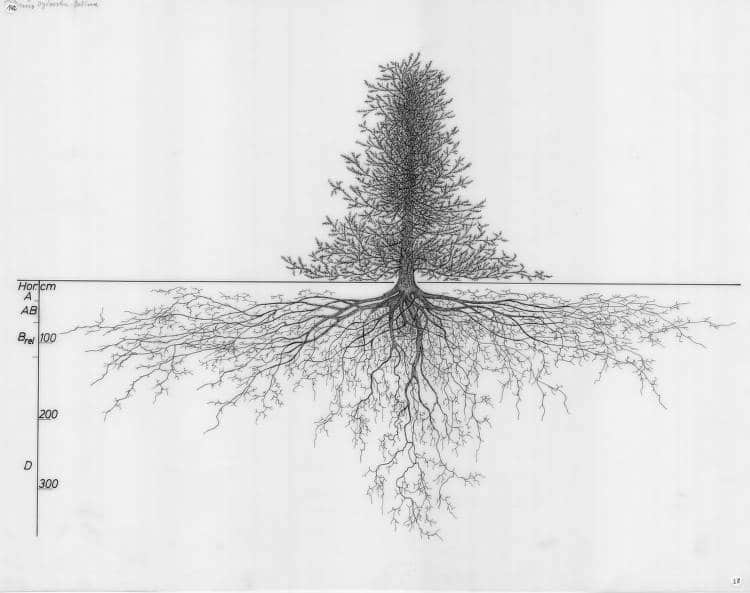
Vintage Plant Drawings
Explore the Unseen Beauty
of Complex Tree Root Systems

Previous Arbor Day Posts
2010
2011
2012
2013
2014
2015
2016
2017
2018
2019
2020
2021
2022
2023 & Veterans Day
Arbor Vitae

"On the last day of the world
I would want to plant a tree . . . "
~ W. S. Merwin ~

Tuesday, August 18, 2009

What Do Writers Want?


FROM "COVER NOTE"
by W.S. Merwin


. . . reader I do
not know
that anyone
else is waiting for these
words that I hoped might seem
as though they had occurred
to you and you would take
them with you as your own
*


FROM "FINDING A NEW POET"
by Linda Pastan


Finding a new poet
is like finding a new wildflower
out in the woods . . .

And the words are so familiar,
so strangely new, words
you almost wrote yourself, if only

in your dreams there had been a pencil
or a pen or even a paintbrush,
if only there had been a flower.